


The Cool Home – Bright Home – Well-Ventilated Home Series | BU DECOR
Some homes have solid reinforced-concrete structures, modern glass doors, and expensive finishes, yet still become unbearably hot at midday and remain stuffy into the evening.
Why are homes getting hotter as building materials and construction technologies advance?
In my view, one reason is that we may have placed too much emphasis on structural strength and architectural appearance without paying enough attention to how a home receives, stores, and releases heat.
This challenge affects not only Vietnam but also many tropical and monsoon-climate countries, including Thailand, Malaysia, and Indonesia…
A Warming Climate and Increasingly Suffocating Cities
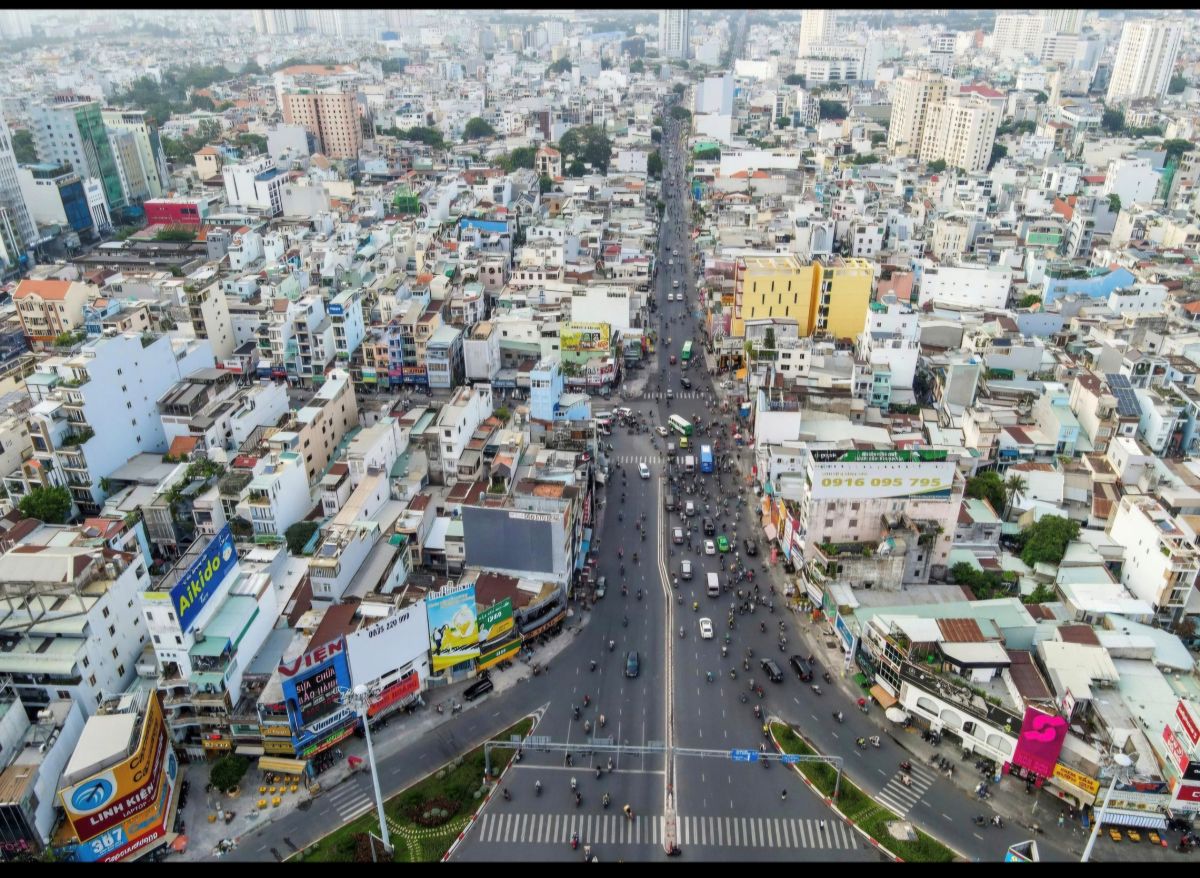
Climate change is raising temperatures and increasing the risk of severe heat waves. Meanwhile, cities are becoming denser with buildings, asphalt roads, concrete yards, and other heat-absorbing surfaces, while trees, natural soil, and water are disappearing.
Traffic, engines, and air-conditioning systems release additional heat. Dust and noise also encourage families to keep windows closed, reducing natural ventilation. Together, these conditions create the urban heat island effect, making densely built areas hotter than greener surroundings.
A home is exposed not only to sunlight but also to an environment that accumulates and radiates heat.
Roofs and Walls – Major Heat-Accumulating Surfaces
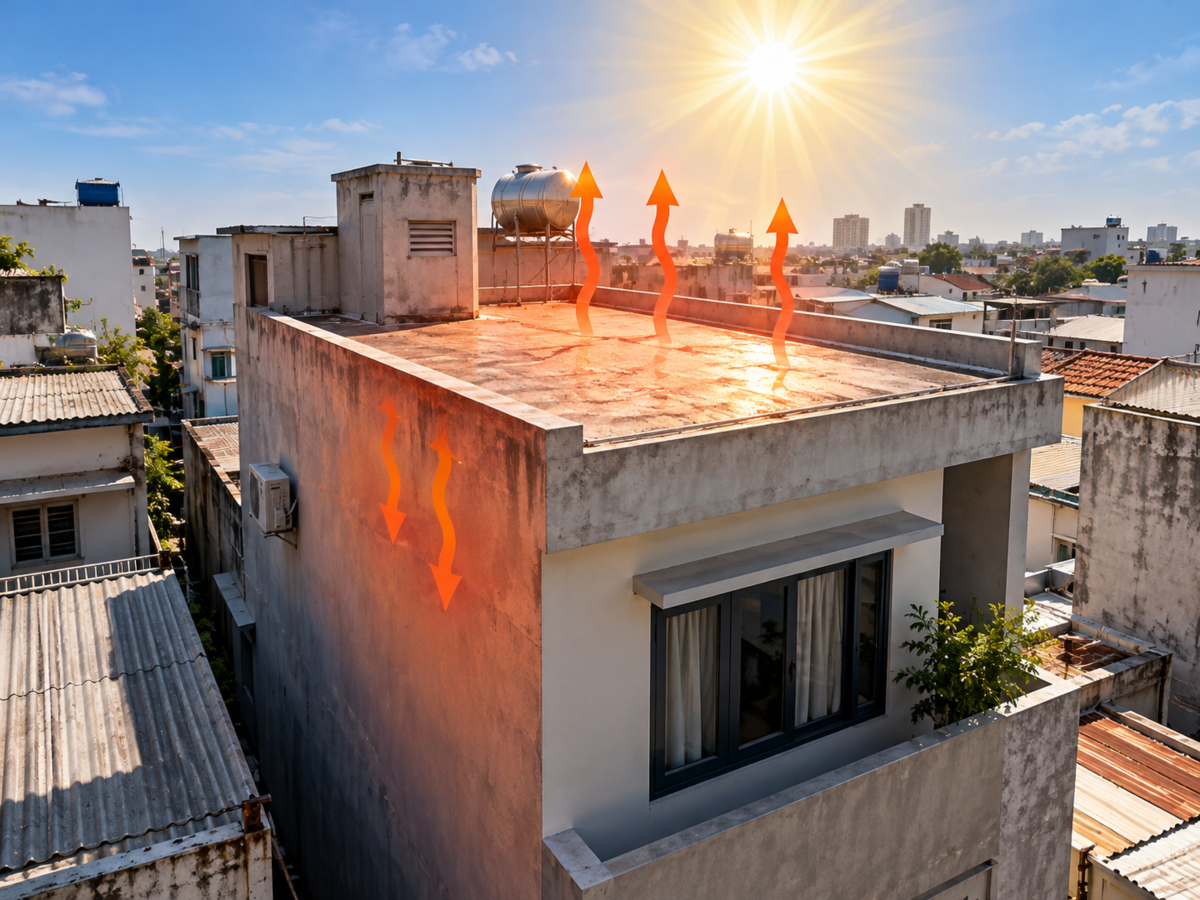
A concrete roof exposed to the sun for hours absorbs heat and transfers it to the rooms below. It may continue radiating heat at night, keeping the top floor hot. West-facing walls receive intense afternoon sun, while east-facing walls can also become hot from morning onward. Without eaves, trees, or other shading layers, these surfaces transfer heat directly into the living space.
Reducing heat is not only about insulation; it is also about limiting the sunlight that heats the building from the outside.
Homes with Extensive Glazing – Beautiful and Elegant, but Easily Turned into Heat Traps
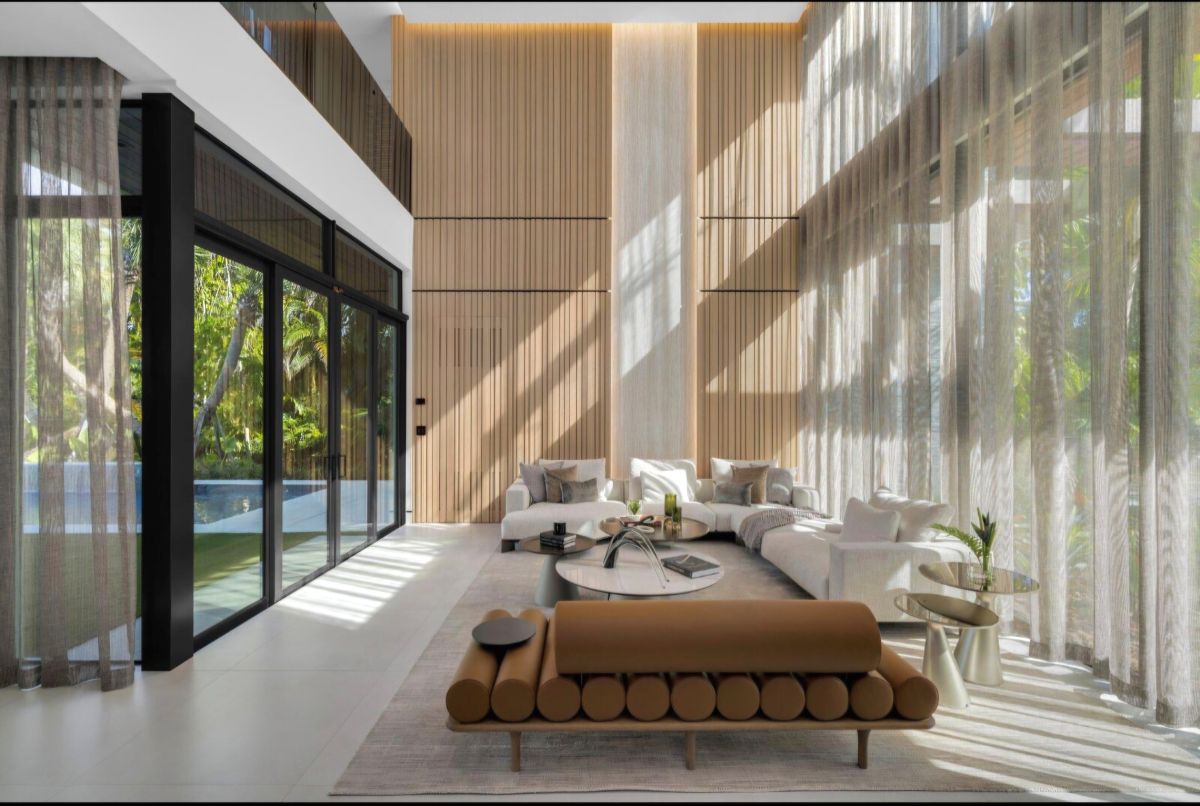
Glass provides a modern appearance, durability, and natural light. However, large glass surfaces exposed to direct sunlight allow solar energy to heat floors, walls, and furniture. Without adequate ventilation, that heat becomes difficult to release.
In tropical climates, extensive glazing without solar control can make a home uncomfortable and increase dependence on air conditioning.
The issue is not limiting the beauty of glass, but using it in suitable locations with effective shading.
Monsoon Winds – Having Wind Does Not Necessarily Mean Having a Cool Home
Vietnam is influenced by the Northeast Monsoon, generally from November to April, and the Southwest Monsoon, commonly from May to October. Actual wind patterns vary by region and terrain: northern areas may experience humid southeasterly winds, parts of Central Vietnam hot, dry westerly winds, and coastal areas changing sea and land breezes.
When outdoor air is comfortable, well-planned openings and exhaust paths can cool a home. But on hot days, wind passing over asphalt, concrete, or areas with little vegetation may carry hot air indoors.
Ventilation is not simply about opening windows. It requires understanding wind direction, seasonal conditions, and whether the incoming air is actually comfortable.

Closely Spaced Townhouses – Limited Space for Trees and Ventilation
Many townhouses are narrow and deep, with neighboring buildings enclosing both sides. To maximize floor area and reduce construction costs, homeowners may leave too little space for trees, courtyards, shading, or ventilation paths.
These decisions can make homes hotter and harder to improve over time. When many homes lack shade and ventilation, their combined effect also worsens the urban environment.
Each home contributes only a small part, but many small contributions can create a major problem.

Air Conditioning – Effective, but Not the Only Solution
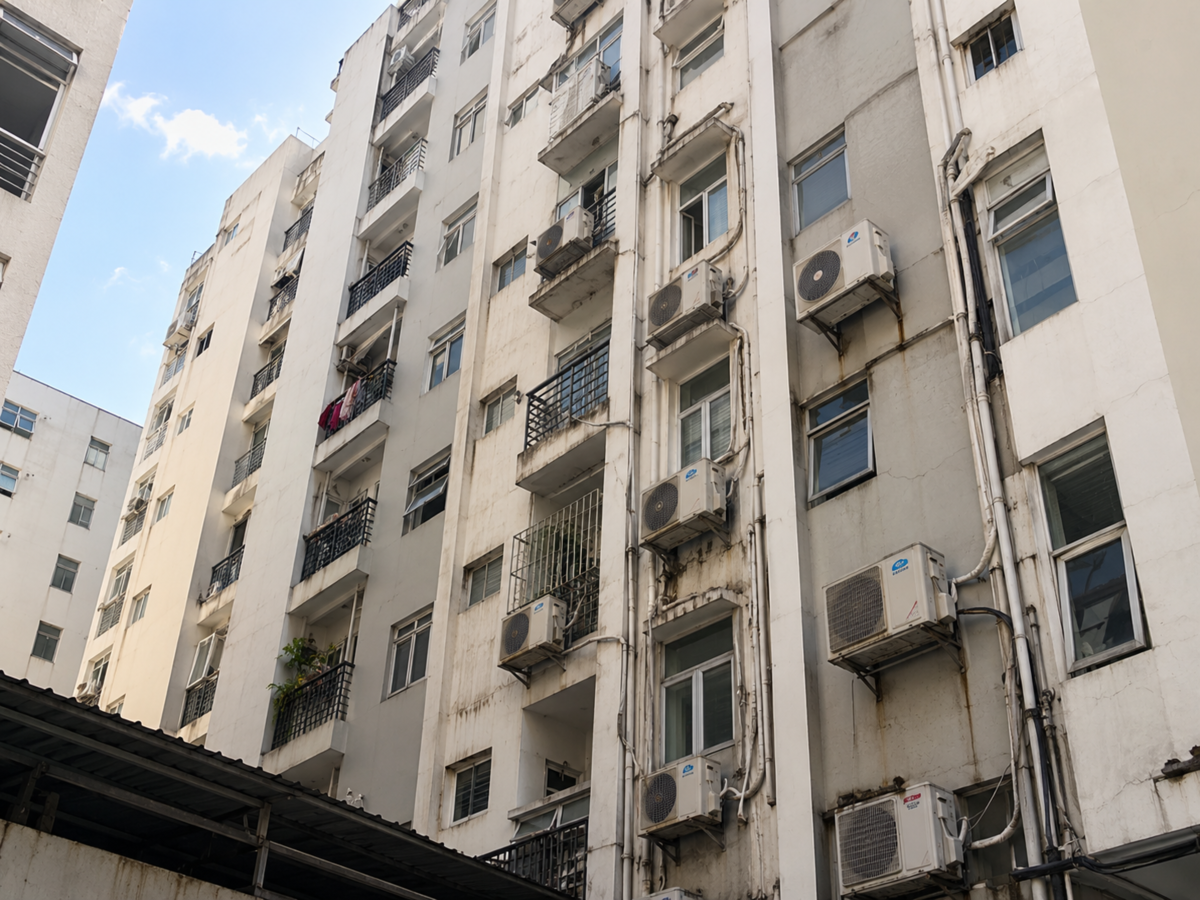
Air conditioning is often necessary and effective, but it consumes electricity, increases household expenses, and releases heat outdoors through condenser units. Extensive use can further warm the surrounding air.
This creates a vicious cycle: the home becomes hotter, air conditioning is used more, electricity consumption rises, and more heat is released outdoors.
Rather than simply buying a more powerful air conditioner, we should first reduce the heat entering the home.
A Cool Home Begins with Design Thinking
Effective heat reduction should begin with three principles:
Block heat from the outside: shade roofs, walls, and glass doors and windows, and use trees and other shaded areas.
Limit heat transfer into the home: select suitable structural systems, materials, and insulation.
Release accumulated heat: provide natural or mechanical ventilation suited to the climate and surroundings.
Not every building needs complex systems or expensive materials. A correctly oriented shade structure, a small green space, or a well-planned ventilation path can make a significant difference.
Effective heat reduction does not begin with buying a larger air conditioner. It begins with understanding why the home is hot and reducing that heat from the start.
A good home should be strong and beautiful, but also responsive to the climate, comfortable for its occupants, and beneficial to the shared environment.
In the following articles, I will share specific solutions for concrete roofs, walls, greenery, ventilation, skylights, and heat-reduction technologies.
BU DECOR – Cool Homes, Bright Homes, Well-Ventilated Homes.